

Although not a Top 8 food allergen, sesame allergies are becoming more common after first being reported in the 1950s. It's important to be aware of the signs, symptoms and what to avoid with a sesame allergy.
Most people think that sesame is a safe alternative for those with nut allergies. Most of the time it is, but what if you had a sesame allergy instead? Over the past few decades, sesame allergies have been increasingly reported and awareness is becoming widespread. The FDA still hasn't added it to the Top 8, nor does it require labeling when present, but it may be in the future (it's unofficially the "9th" most common). *Update as of 2021, now RECOMMENDED labeling*. Sesame allergies present themselves as any other major allergen would with hives, rash, trouble breathing, etc. all the way to full anaphylaxis reaction requiring an EpiPen and immediate hospitalization. If you have a sesame allergy, that doesn't mean you're allergic to all seeds. The most common concomitant allergen is sunflower (however, this isn't always the case). There is some correlation between tree nut and peanut allergies, though. 50% of those with both tree nut and peanut allergies also have a sesame allergy.
Grab this word search activity to help teach your kids which sesame terms to look for on packages!
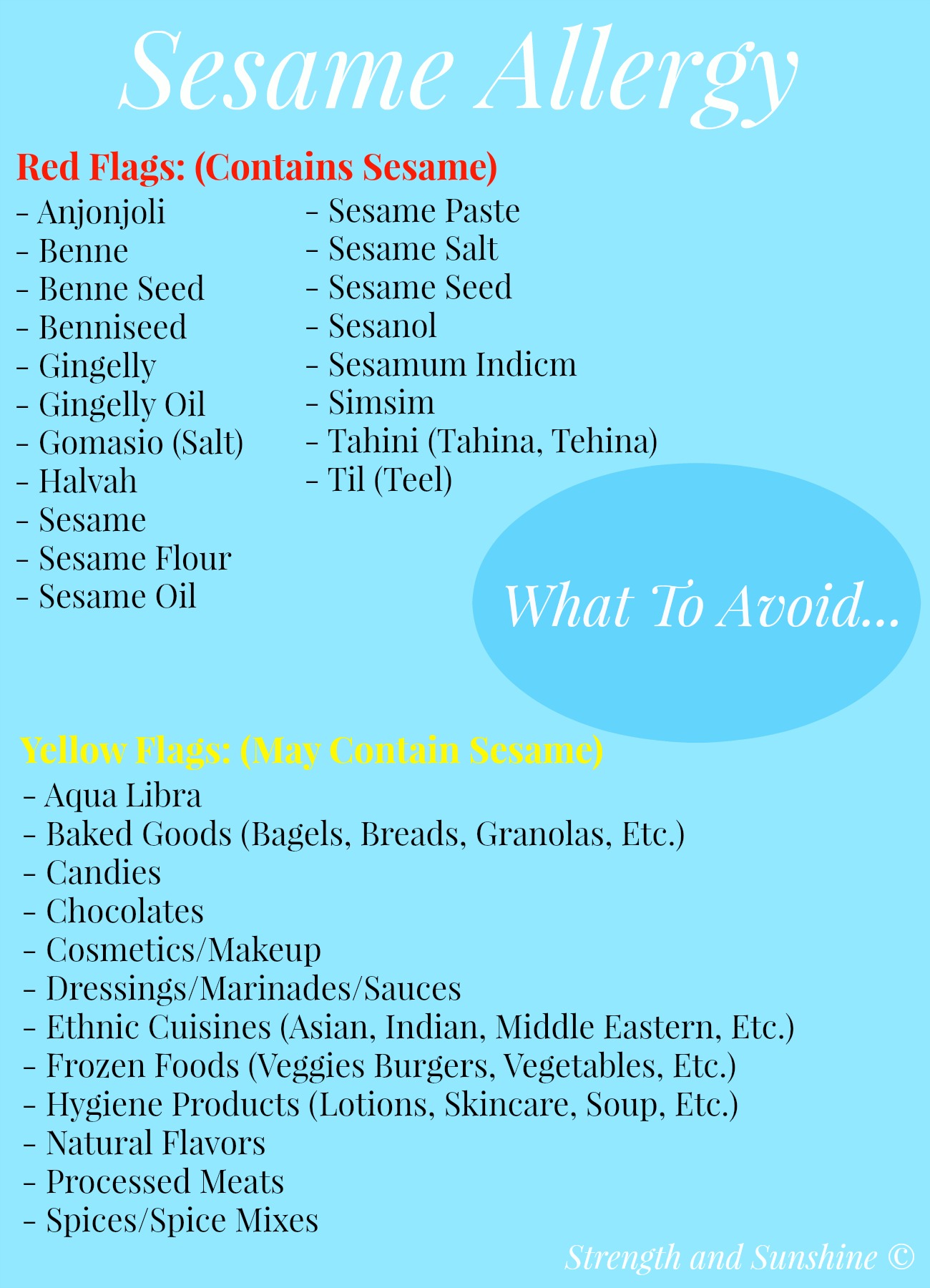
At first, you may think a sesame allergy is pretty easy to navigate, but because it is not a labeled allergen, sesame containing ingredients and foods are hard to identify. "Natural Flavor" is a big red flag for those with sesame allergies (you see that on ingredient labels all the time). Personal hygiene products need to be watched as well. You might not realize that your body lotion contains sesame and inadvertently end up with hives all over your arms! Baked goods are commonly dusted and topped with sesame seeds (or easily cross-contaminated), eating out at ethnic restaurants is very dangerous (Asian, Indian, etc.), and any spice mixture may be contaminated with sesame. Just like any major food allergen, you must be aware and vigilant, especially for those unexpected and sneaky places.
So tell me:
+ Do you or a loved one suffer from a sesame allergy? Share your tips and stories below!
Other “What To Avoid” food allergy posts: Soy, Egg, Dairy, Corn, Tree Nut, Peanut, Shellfish, Fish, Nightshade, Wheat, Celiac Disease (Gluten).
Sources:
+ http://www.kidswithfoodallergies.org/page/sesame.aspx
+ https://www.foodallergy.org/allergens/sesame
+ https://www.foodallergy.org/file/sesame-webinar-slides.pdf
———————————————-
Stay connected: Facebook: Strength and Sunshine Twitter: @RebeccaGF666 Instagram: rebeccagf666 Pinterest: RebeccaGF666 Bloglovin’: Strength and Sunshine
Shirley Wood
This is such a helpful list for those with possible allergies to nuts. Pinning.
Rebecca @ Strength and Sunshine
No, sesame. You may want to reread this post.
Starr
Natural flavours are tricky, it's hard to know what they're hiding in there (like beaver gland secretions ).
Rebecca @ Strength and Sunshine
I know! Yuck!
Mary
I love these cute little cheat sheets you post for different allergies. I had to pin this 🙂 Have a great day Rebecca.
Rebecca @ Strength and Sunshine
Thanks! I was so happy to bring back the series! It's been awhile since I posted one!